Random thoughts that don't fit anywhere else?
Security cannot be understood without implicitly explaining the adversary against it
(first entered and last updated in 18/10/2026)
- We start this with a disclaimer that I am NOT a security expert in any way, but rather a highly opinionated individual.
- With that in mind, my first accusation under this thought is Google secures against users (therefore Goolag) to ensure their merchandise (userdata) remains as untouched as possible for their real customers (advertisers, scammers, McUgly).
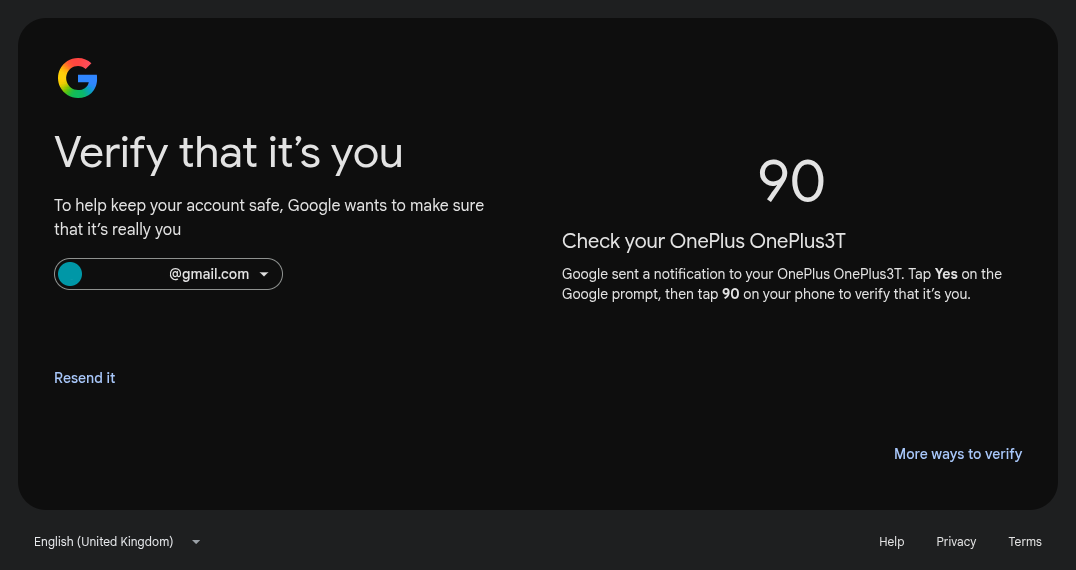
- Google account management requires password and 2FA prompt on another device. We readily accept the password requirement; but not so much with the prompt on another device, especially if said another device was inaccessible (FUBAR, missing, etc.).
- Keep Android Open argues that Google's developer verification program globally blocks Android apps whose developers didn't surrender themselves to Google. Considering the mess Play Store is, Google's developer verification furthers their security against the user, not hostile entities targeting the user. Dedoimedo argued that Google's developer verification should be exclusively applied to the Play Store and don't interfere with sideloading.
- Alternate YouTube clients users have every reason to believe that YouTube alone fulfills my accusation. What didn't help YouTube's case was that its Android app demands Play Integrity at Device level.
- My second accusation was that Microsoft also secures against its users.
- Pluton writeup by Cheapskates guide (archive.org)
- Windows 11 demands TPM and Microsoft account.
- My third accusation goes to myself, where I claim that I secure myself from tech corpos' bad decisions as much as I could, but with mixed levels of success.
- For starters, my preference of older Android builds is clearly not going to be as secure as newer ones will be (both against and for the user). However, my argument here goes for the user experience ‐ to me, if the user experience is negatively affected by an upgrade and/or update; regardless of security excuses, I would rather stay in the older (but with the good old user experience) build.
- And while the common (strawman?) excuse of "hackers" (which I will refer to as hostile entities) exist, I gotta point out the fallacies as much as an opinionated idiot could (before the security experts blast me, both of the real kind and charlatans).
- Their effect is not as great as you think in most cases. Dedoimedo argued that a common person is more likely to have their data "accidentally" leaked from corpos' databases (or sold around to advertisers) than getting cracked by some scriptkiddy from Ohio.
- Most of the time, common sense is enough against those scriptkiddies (or, at the very least, being outside their knowledge). That said, once the threat level rose from scriptkiddy to cyberwarfare levels, your most viable defense is either not being in that situation to begin with (or burn up all traces of the old you & restart anew)
OS‐level age tracking is a pointless Pandora's Box
(first entered in 21/4/2026; last updated in 21/4/2026)
- In a nutshell : Add more identification to metadata for an arbitrary law, further endangering its victims while serving no other purpose.
- No state‐approved identity required ‐ As argued by Ageless Linux (archive.org), anyone (including children) can lie their age away (for whatever purpose) and they will learn that the law is something to circumvent (as it is with the Prohibition in the U.S.A., which apparently also formed NASCAR). Regardless of our opinion towards the law, this form of age tracking is pointless (and is the easiest to circumvent).
- State‐approved identity required, but no Big Tech backend ‐ welp, now your OS has your state‐approved identity, something cycrims (both of the state and off the state) always had an interest in abusing.
- State‐approved identity required and with Big Tech backend ‐ And the Big Tech has your state‐approved identity too. Considering their track record of abusing those... you're fucked.
- Under the one family computer ‐ Kind of depends on how the family computer is set up, but regardless age tracking is one account from pointlessness because at least one account owner will be ≥21 years old.
(first entered in 22/4/2026; last updated in 22/4/2026)
Back to top
Main Page